New Development
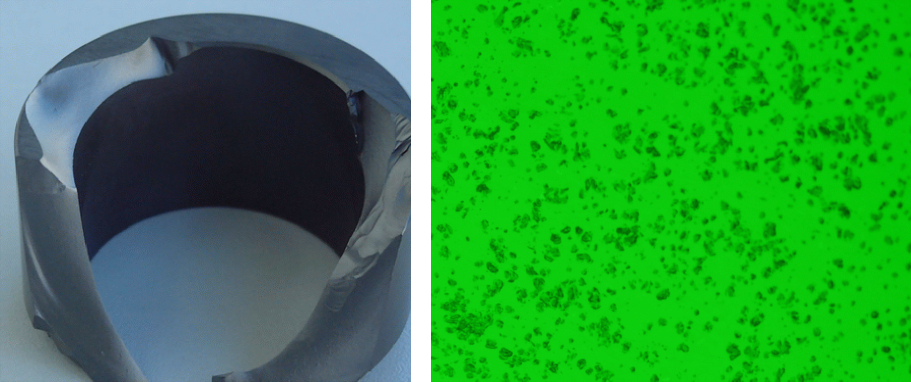
The SSIC+C is an advanced material using alpha sintered silicon carbide (called SSIC) combined with pure carbon graphite. There are four main areas where an SSIC+C seal out performs a normal SSIC seal from an engineering standpoint. First, the coefficient of friction is lower in a SSIC+C. The structure of this material will provide more lubricant than SSIC. This benefits the pump by wasting less energy turning the seal and can prevent the faces from 'seizing' or 'locking-up' during times of inactivity. Second, the SSIC+C has better self-service performance than SSIC, it provides long life when used in hard material vs. hard material environment and also prevent machine down time I.E. lost production. Third, the SSIC+C has a much better wear resistance and high PH range than resin carbon or metal impregnated carbon, it can also provide excellent lubricant when it is used in a rotary face application against SSIC or Tungsten Carbide. The corrosion resistance and the high temperature range of SSIC+C are better than resin carbon or metal impregnated carbon. So it is the best choice used in a rotary face application.
Specification of sintered silicon carbide
| Properties | SSIC | SSIC + C |
| Density (g/cm3) | 3.10-3.15 | 2.85 |
| Porosity (vol%) | <2.5 | 5-12 |
| Hardness( kgf/mm2) | 2350-2450 | 2400 |
| Young's modulus(kgf/mm2) | 4.1x10⁴ | 4.0x10⁴ |
| Thermal Conductivity (Wm/k) | 125.6 | 110 |
| hermal Expansion Coefficient (RT-1000 C) | 4.1x10⁻⁶ | 4.0x10⁻⁶ |
| Working Temperature(℃) | 1650 | 1300 |
| Poission Ratio | N/A | 0.15 |
Specification of Reaction bonded silicon carbide
| Properties | SIC | SIC + C |
| Density (g/cm3) | 2.95-3.06 | 2.65-2.80 |
| Hardness( kg/mm2) | 115-125(HS) | N/A |
| Thermal Conductivity (Wm/k) | 2350-2450 | 2400 |
| Young's modulus(kgf/mm2) | 35-110 | 120 |
| Thermal Expansion Coefficient (RT-1000 C) | 4.3x10⁻⁶ | 4.05x10⁻⁶ |
| Thermal Conductivity (Wm/k) | 125.6 | 110 |
| Working Temperature(℃) | 1450 | 1300 |